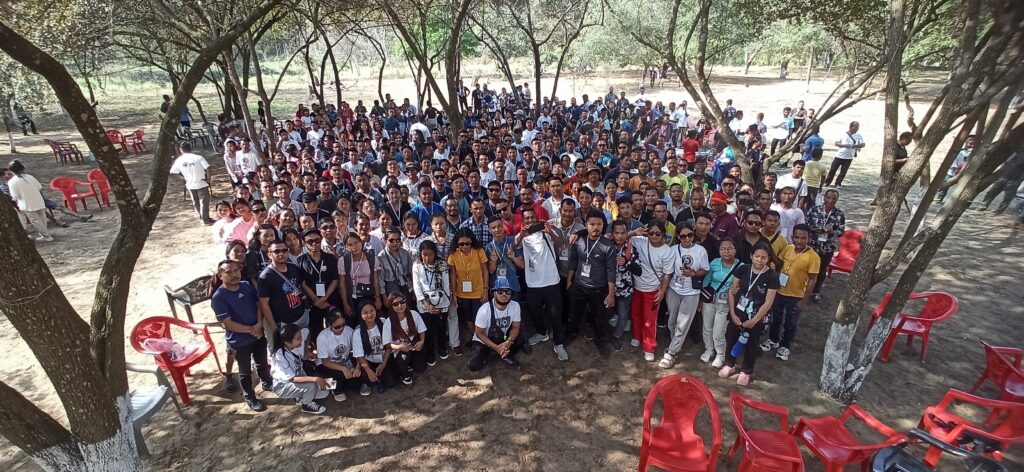
Empowering Youth for a Brighter Tomorrow

Durasal R. Marak

Youth Director, ABDK

The Formation of the ABDK Baptist Youth Fellowship (ABDK BYF)

The Garo Baptist Convention (GBC), known in the A·chik language as A·chik Baptist Dal·gipa Krima (ABDK), is the preferred nomenclature used by its members. The establishment of the ABDK Baptist Youth Fellowship (BYF) occurred in the year 1948. Prior to this development, several separate Christian fellowships existed among A·chik youth. These included the Panterangni Dol (a young men’s fellowship established in 1905), the Me·trarangni Dol (a fellowship for young women), and the Christian Endeavour (CE) in Tura, which included both male and female members.

Despite these initiatives, there was no unified fellowship encompassing all youth—both young men and women—within the ABDK. This changed in 1945 with the arrival of Rev. Hubert M. Randall, an American Baptist missionary deeply committed to youth ministry. Recognizing the absence of an inclusive youth fellowship, Rev. Randall initiated a concerted effort to establish such an organization within the Garo Hills. As a result of his dedication, the Baptist Youth Fellowship (BYF) was formally established in October 1948 in Tura, with the purpose of uniting young Baptist believers across gender lines. Subsequently, in February 1949, the fellowship received official endorsement from the ABDK General Assembly (ABDK Soba), which was held in Santipur, Krima No. II.

Since then, it has become customary to refer to this fellowship as the Krima BYF at the association level and as the DKBYF (Dal·gipa Krima BYF) at the convention level in written and official communications. From its inception, the BYF has played a significant and dynamic role in shaping the spiritual and social lives of the youth within the ABDK community.
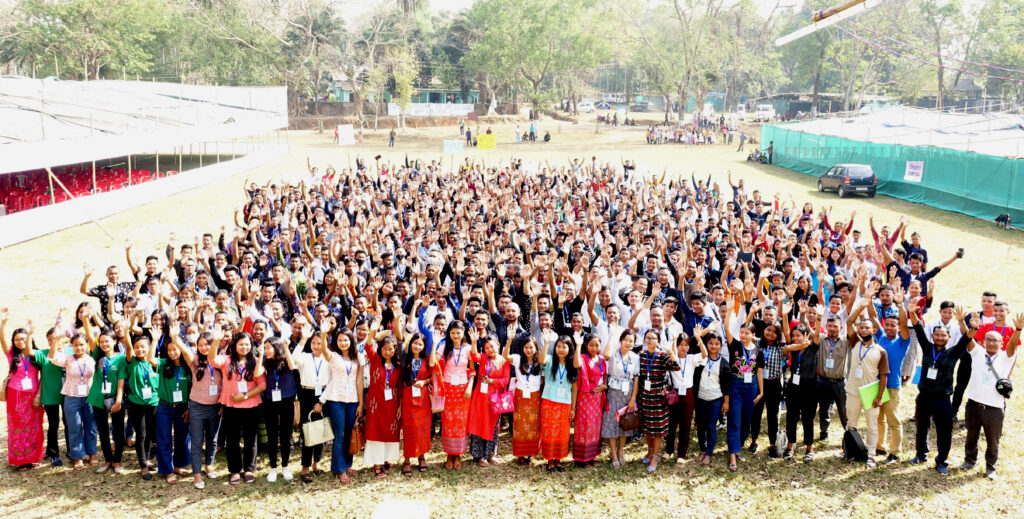
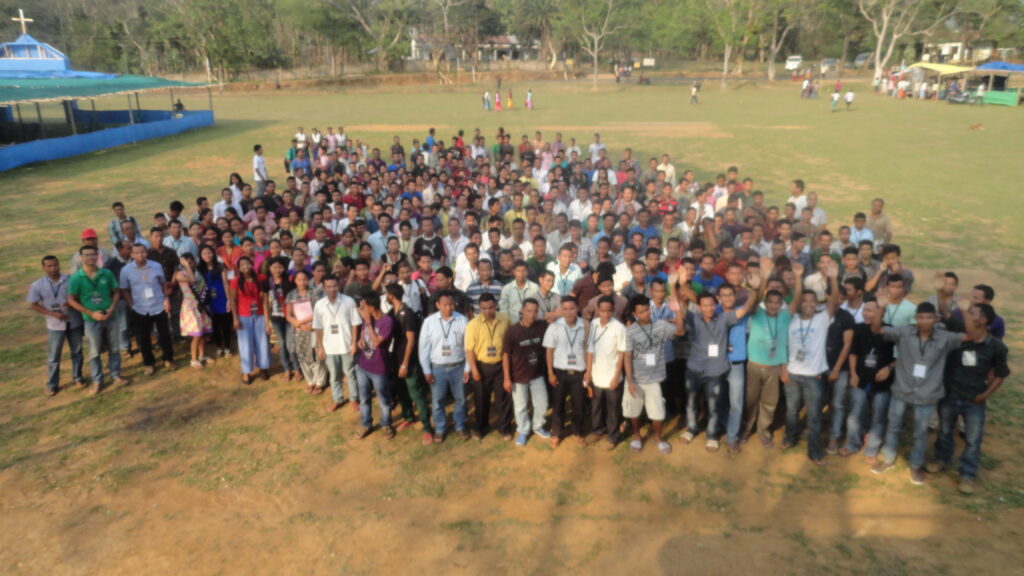
Our Objectives

  1. To cultivate future leaders for both the church and society.
  2. To help troubled teens who have dropped out of school, are pampered, rebellious, addicted, social outcasts, lack morals, etc.
  3. To participate in the propagation of the gospel.
  4. To impart to young people their obligations (roles and responsibilities) to God, family, and community.
  5. To preserve and advance the A·chik culture
  6. To encourage younger generations to pursue education
  7. To maintain the warmth of fellowship among churches, associations, and conventions.
  8. To contribute to society while keeping a clear head.

THE BYF: A SERVICE FOR AND BY YOUNG PEOPLE

The ministry of the BYF was totally among the youth. With the exception of the few leaders at the association and convention levels, every aspect of the ministry was in the hands of young people, while parents or elders were pretty much out of the loop. After careful scrutiny, it was crystal clear that this ministry was by the youth and for the youth.

  1. A Ministry by Young People: If we viewed the BYF through this lens, it would be the youth’s ministry to promote encouragement, upliftment, leadership development, and intercession among its members. However, I am particularly intrigued by the fact that this phenomenon has been observed exclusively among churchgoers and young individuals with Christian upbringings.
  2. A Ministry for the Young People: From a different standpoint, if we were to assess the BYF through this perspective, the BYF would be the ministry of youth catering to the needs and interests of fellow young individuals. Youth who are already active in the church and knowledgeable about the teachings and doctrines of the Christian faith undertook the task of ministering to those who were not involved in church activities and lacked familiarity with the living God.

STREAMLINING STORY

The BYF existed in the churches, krimas, and ABDK for many years; however, it has since been turned around and has been operating in parallel with the church. After a thorough review of how the Baptist Youth Fellowship (BYF) is run by different churches, krimas, and ABDK, it was found that the independent management of these groups has led to a misunderstanding of what a youth fellowship was meant to do and what its goals were. They were not only brought up and kept apart but also had their own budgets and administrative structures and made their own choices without consulting the entire congregation, much like autonomous organisations. In light of this, the entire A·chik Baptist congregation has resolved to improve the BYF by instituting specific guidelines in the year 2021. These are the guidelines for the Youth Ministry:

Name: It will be referred to as the Youth Ministry rather than the Youth Department in all the churches, as well as at the Krimas and ABDK levels. It will not be administered separately but will be under the purview of the entire congregation, as indicated by the name.

Structure: In the context of a church, the Youth Ministry will be a portion of the church ministry, alongside mission, Christian education, Sunday school, etc., all of which will be administered by the church with an understanding of the local congregation. The church will establish a committee to make programmes and activities based on the needs of the church’s youth. The committee will propose the programmes, activities, and plans it has selected to the young people, and the final decision will be taken by the local congregation. The operational framework for managing the Youth Ministry at both the association and convention levels remains uniform, with the exception that the committee will include the full-time youth secretary in the role of a member secretary.

Functions:

  1. At the ABDK and Krima levels, a convener or chairman will be designated to preside over committee sessions, replacing the role of a president.
  2. The youth director will be a member secretary of the Youth Ministry committee at the ABDK level.
  3. The selection of committee members for Krismas will depend on its size, with a range of five to seven individuals being chosen.
  4. There will not be separate board meetings or annual general meetings at the ABDK and Krima levels. Instead, the committees will hold their meetings in accordance with the ministry’s requirements. The committee is responsible for reviewing and organising programmes and activities, which must thereafter seek approval from the Annual General Meeting (AGM) of ABDK or Krimas.
  5. In the case of ABDK, the committee can convene a meeting of all youth secretaries of the krimas based on the requirements of the ministry.

The General Secretary of ABDK will serve as an ex officio member of the Youth Ministry Committee, while the Executive Secretary will hold the same role in the Krima Youth Ministry Committee.

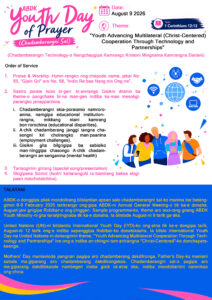
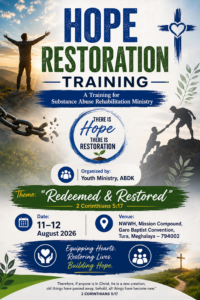
Upcoming Programmes

Youth Conference, 2026

YOUTH MINISTRY COMMITTEE (2023-2026)

Waipin K Marak
MR. WAIPIN K. MARAK
Convener, Krima IV

Arpan R Marak
MR. ARPAN R. MARAK
Member, Krima VII

Thesius N Sangma
MR. THESIUS N. SANGMA
Member, Krima XVII

Prince Smart R Marak
MR. PRINCE SMART R. MARAK
Member, Krima IV

MR. TIRETH G. MOMIN
Member, Krima XI

Jagame Ch Momin
MS. JAGAME CH. MOMIN
Member, Krima IV

Babuth Marak
MR. BABUTH MARAK
Member, Krima IX

Visited 209 times, 1 visit(s) today